
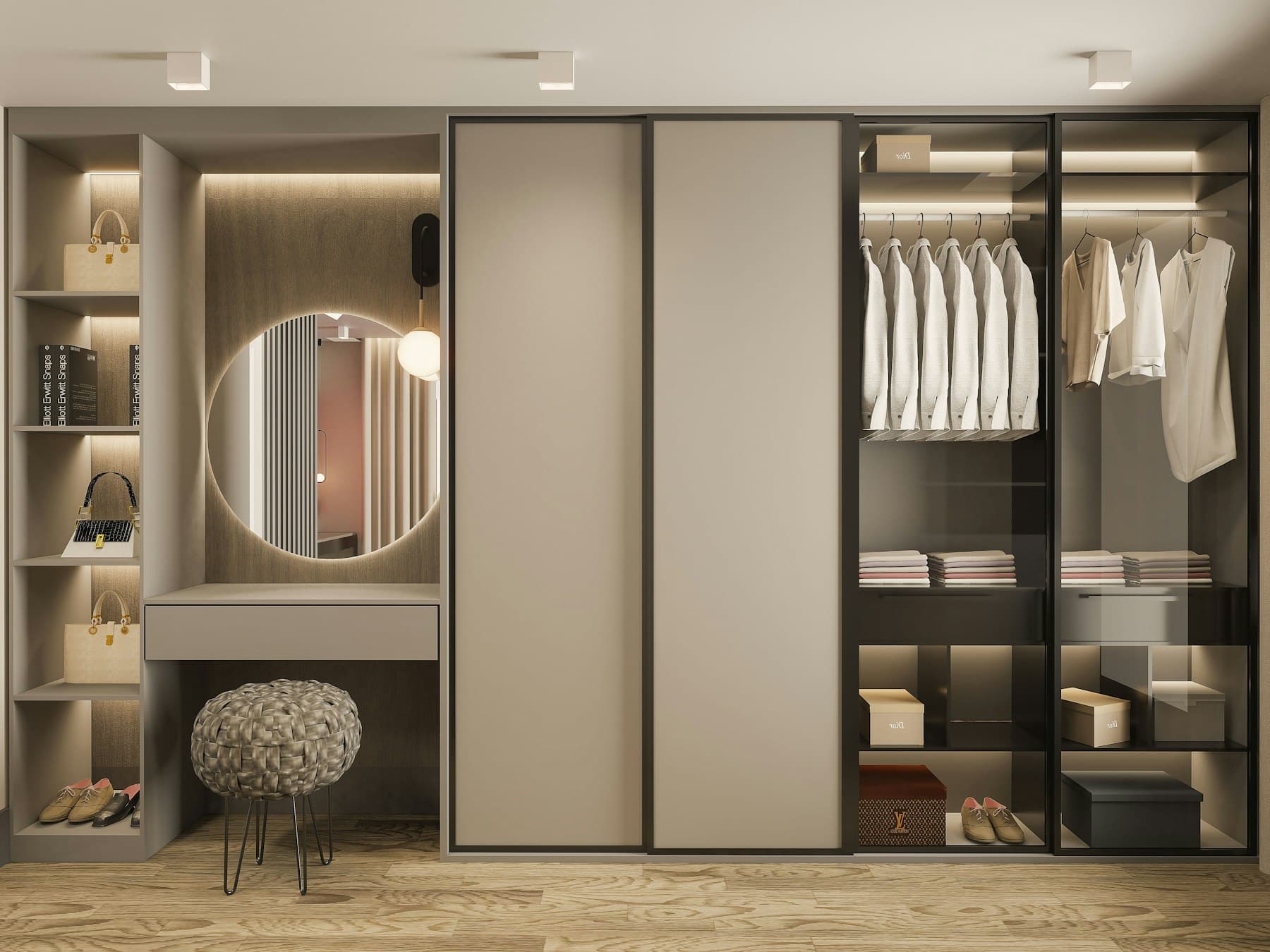
Wardrobe Design Guide: Sliding vs Hinged, Internals, Materials and Cost
Sliding or hinged? Loft or no loft? How to plan wardrobe internals, choose materials that resist NCR humidity, and budget for modular wardrobes.
Read the guideThe best wardrobes start from what you own, not from a catalogue. Planned well, a wardrobe keeps the bedroom clear and makes getting ready on a busy morning effortless.
Storage planned around what you own and how you get ready.
Read the full wardrobe design guide for dimensions and materials.
Laminates are durable and economical; acrylic adds gloss; veneer brings real wood grain; lacquered glass and mirrors make small rooms feel larger. Compare them in our finishes guide.
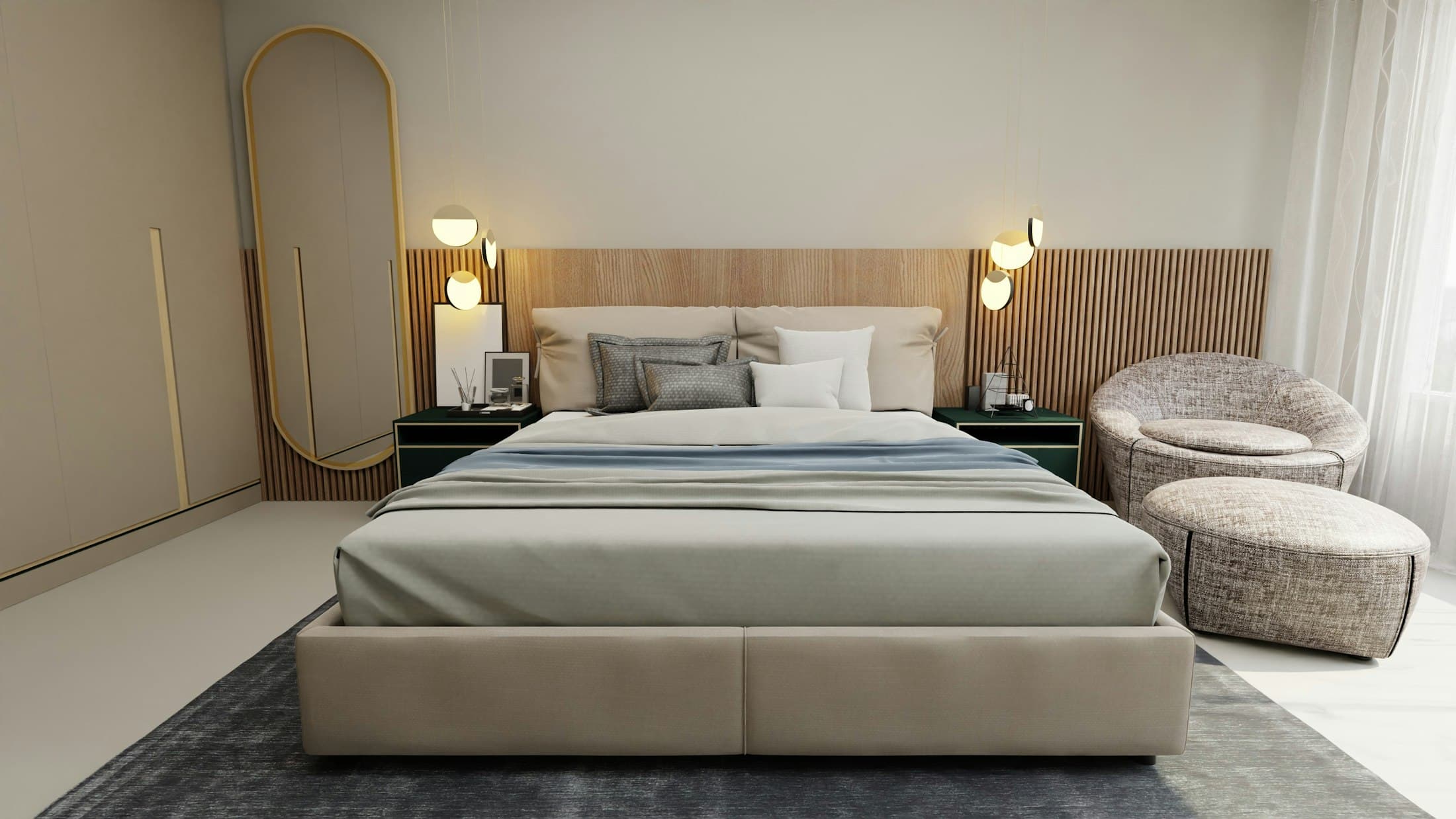
Photographs on this page are licensed sample images used for inspiration; they are not AHU Interior projects. Image credits
Hinged wardrobes give full access and cost less; sliding wardrobes save space where the room is tight. If there is under about 90 cm in front of the wardrobe, choose sliding.
Check the wall for seepage first, use BWR or BWP plywood on walls shared with bathrooms or exteriors, and leave a small ventilation gap behind the carcass.
Sliding or hinged? Loft or no loft? How to plan wardrobe internals, choose materials that resist NCR humidity, and budget for modular wardrobes.
Read the guide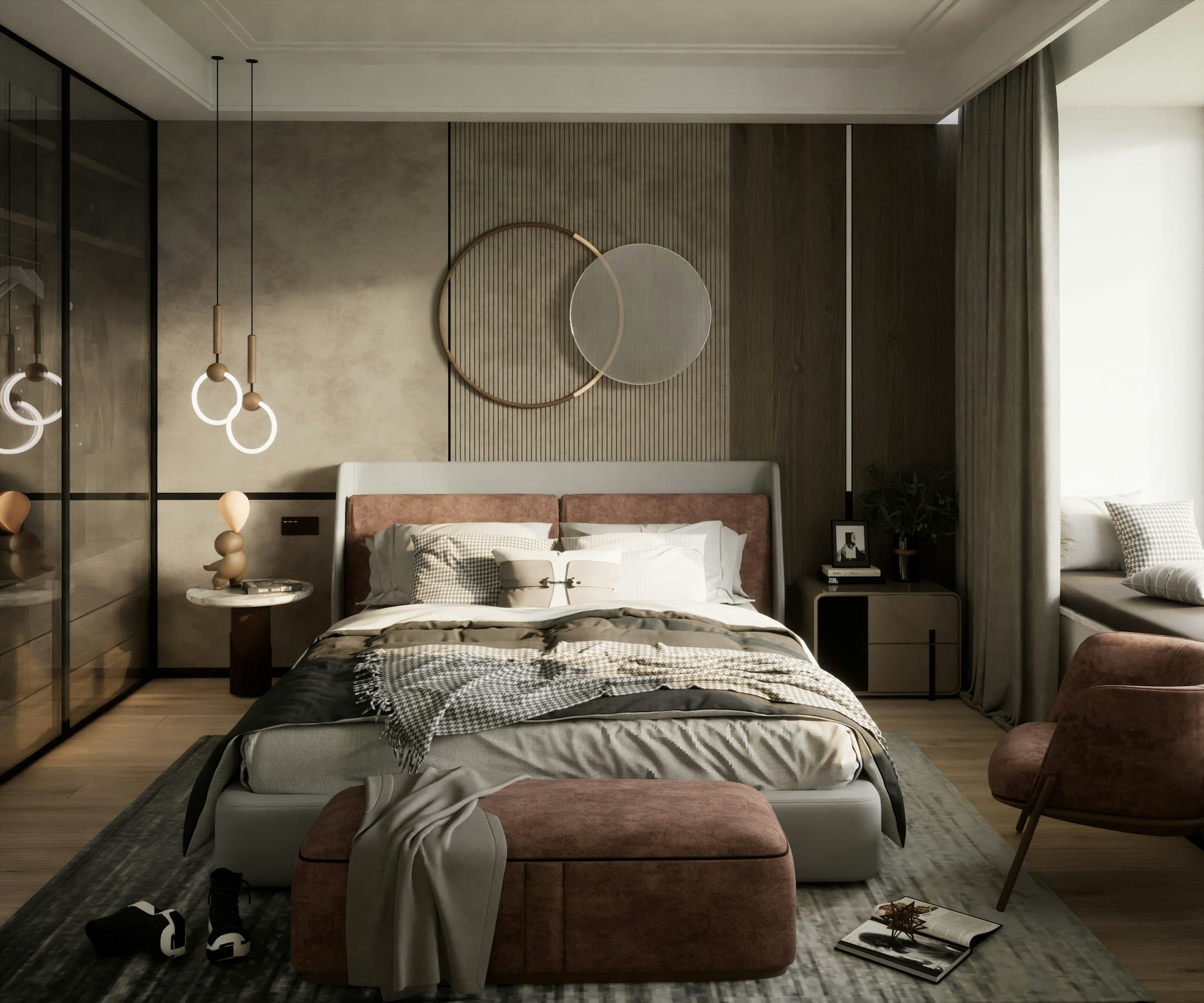
Wardrobe colour and laminate combinations that work — wood and white, two-tone, pastel, dark and mirrored ideas for master bedrooms, kids’ rooms and small rooms.
Read the guide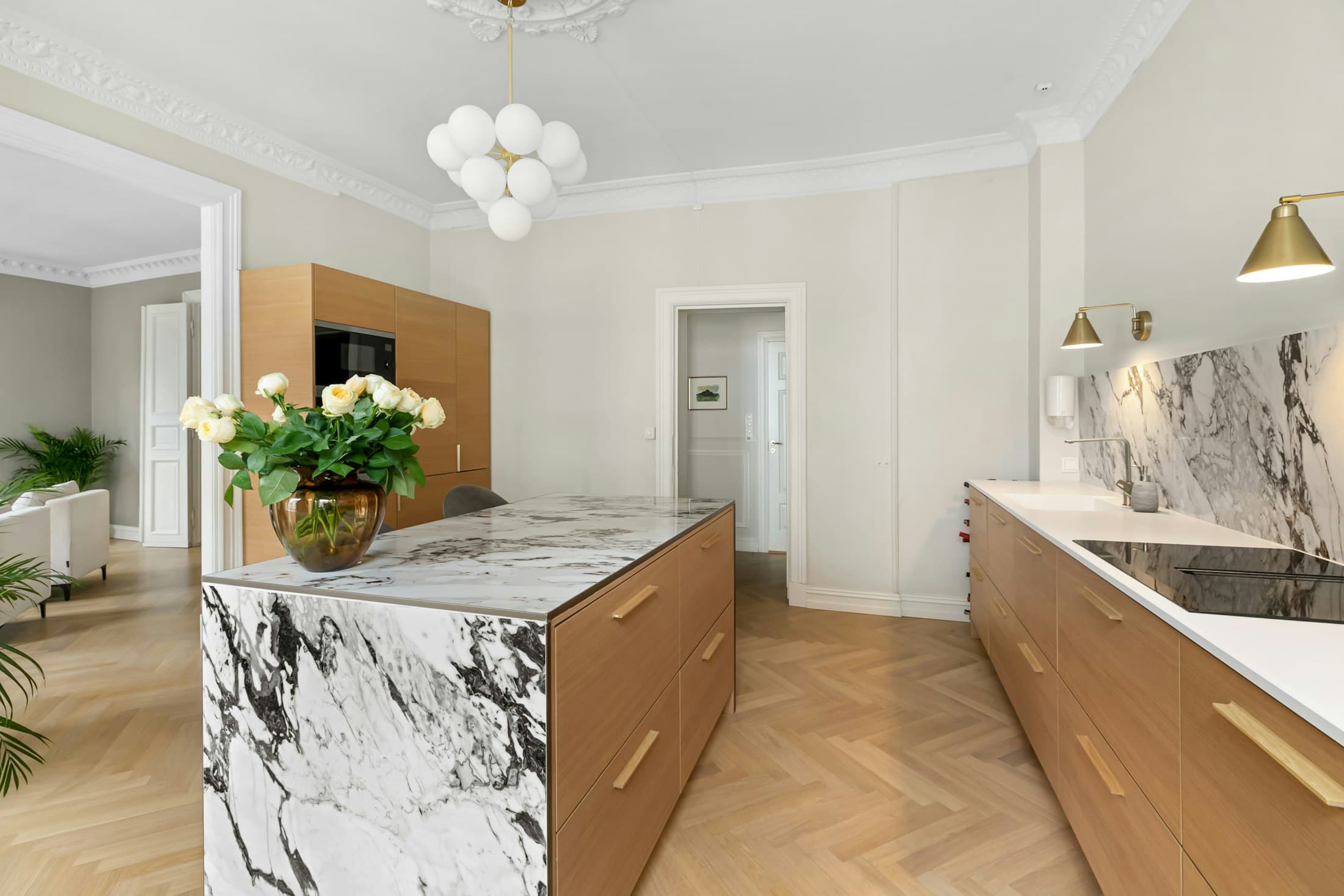
Compare laminate, acrylic, PU paint, membrane and veneer finishes for kitchens and wardrobes — looks, durability, maintenance and relative cost.
Read the guideTell us about your home or workspace. We’ll listen, ask the right questions, and suggest how we could shape it together.