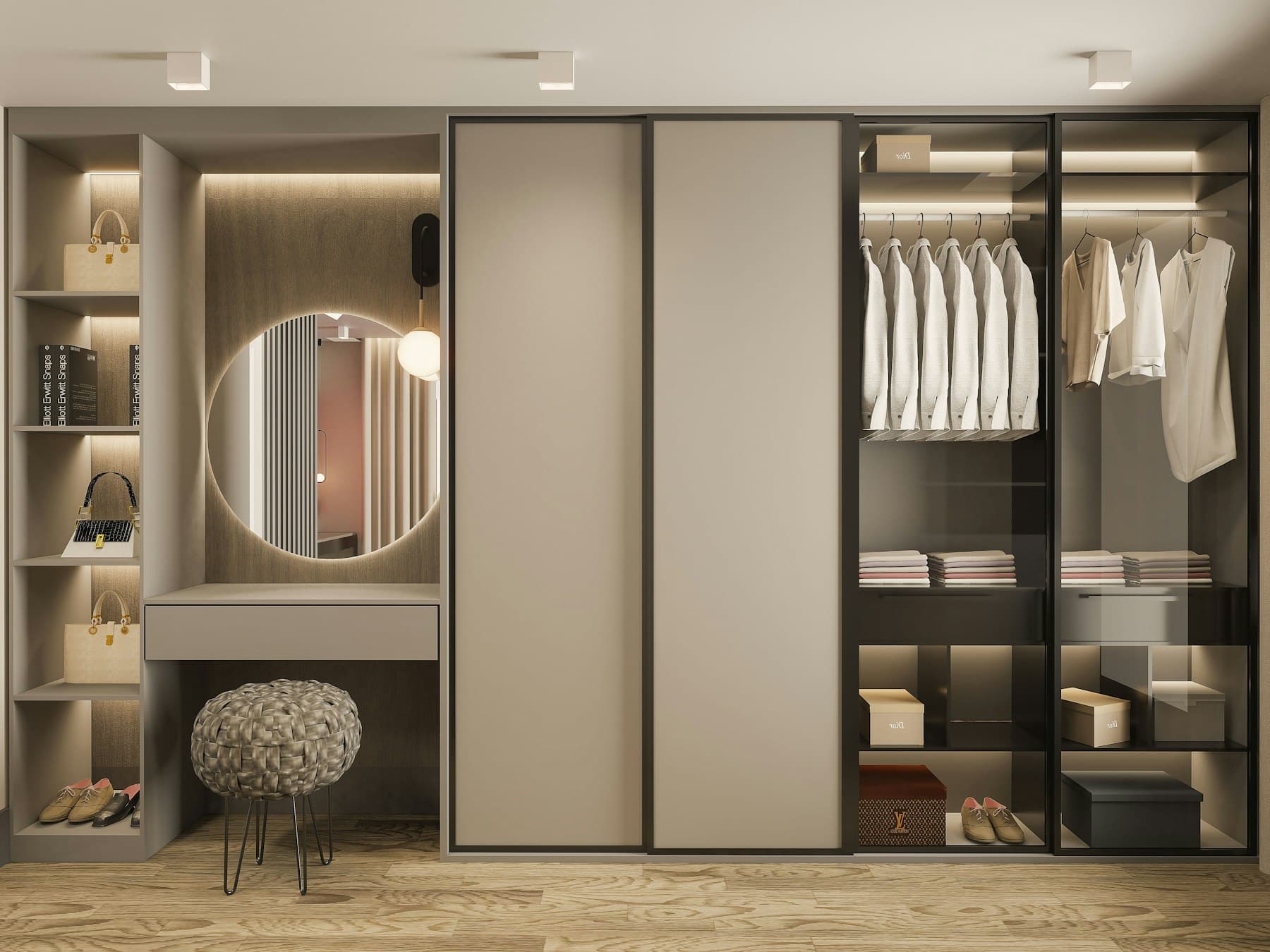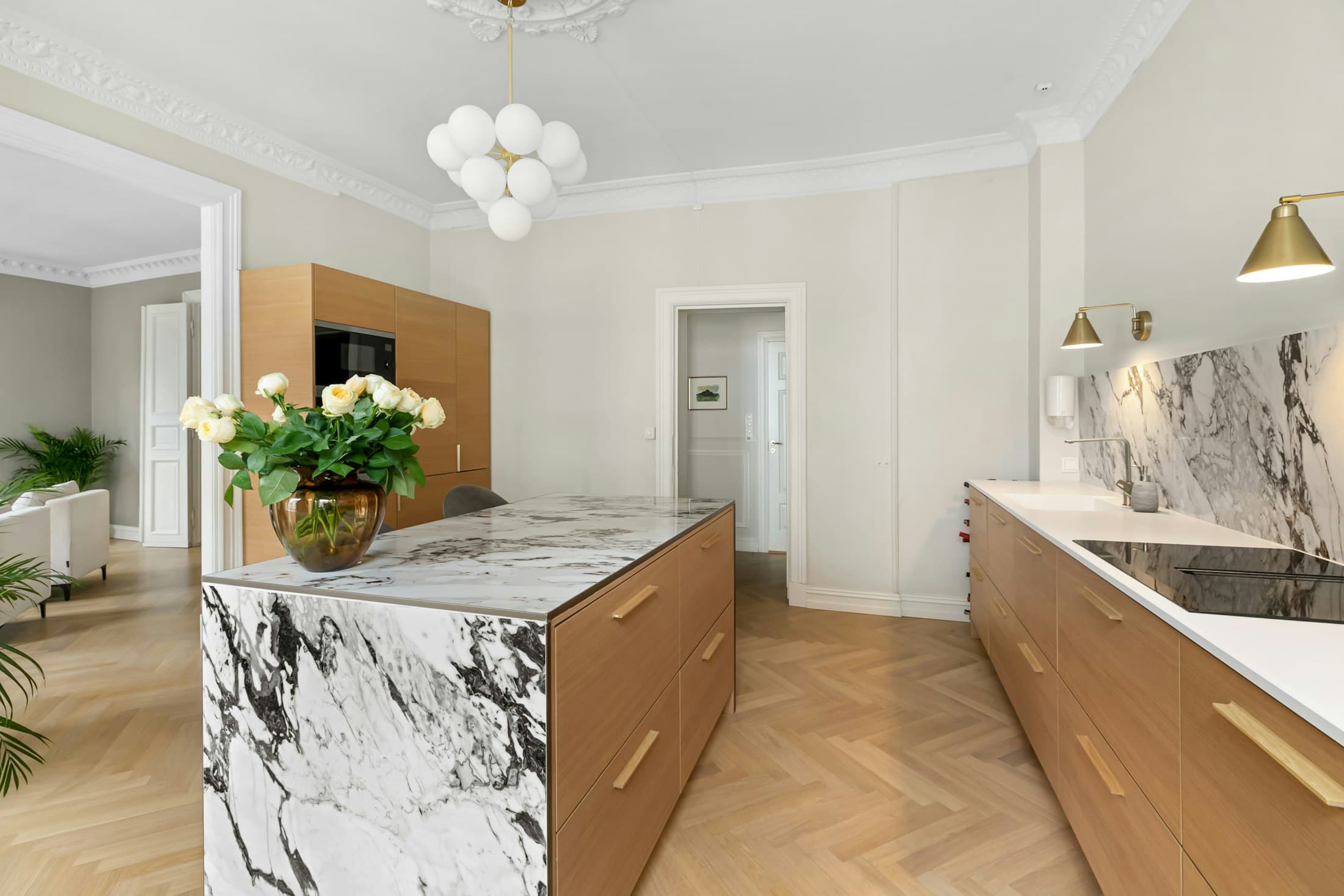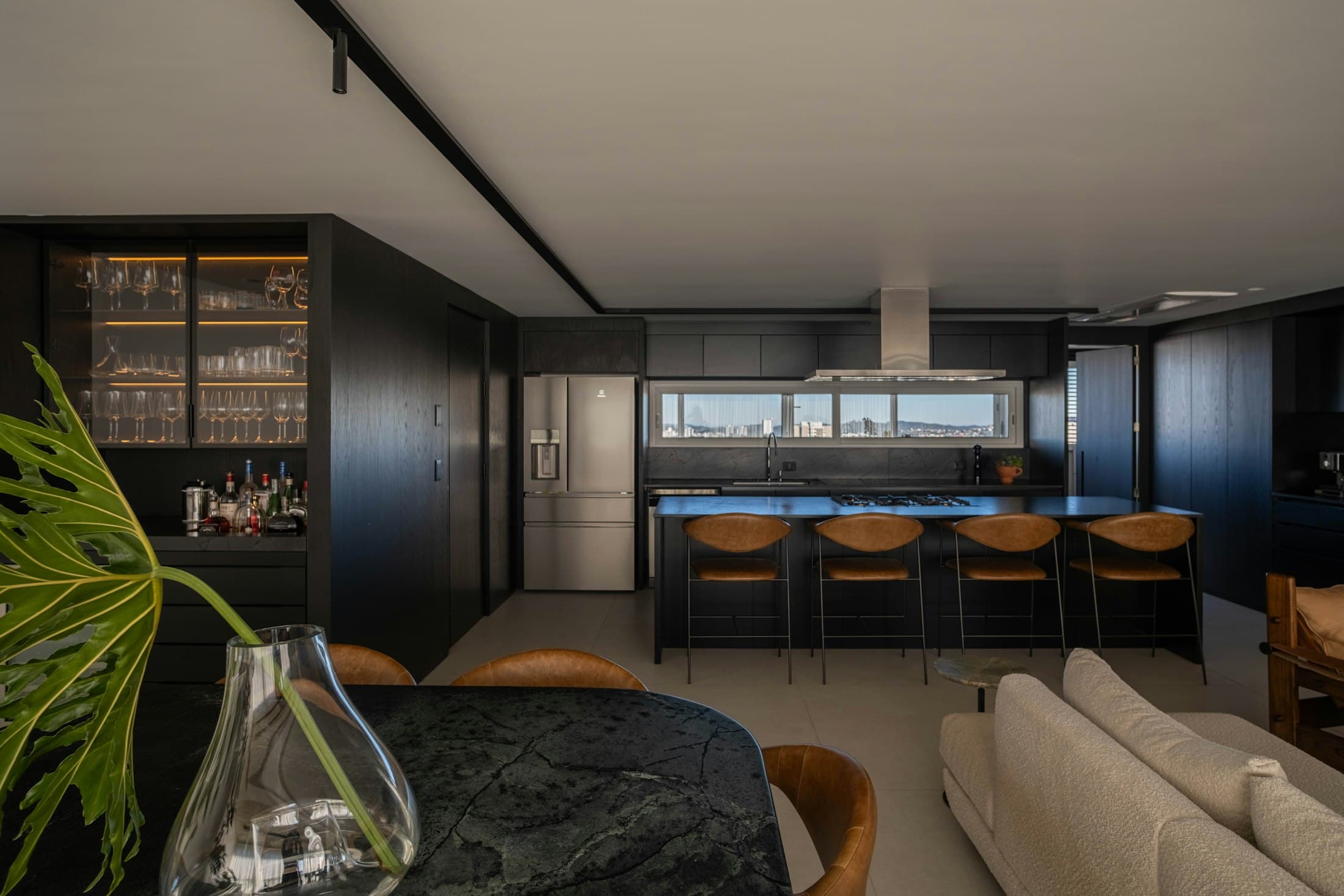
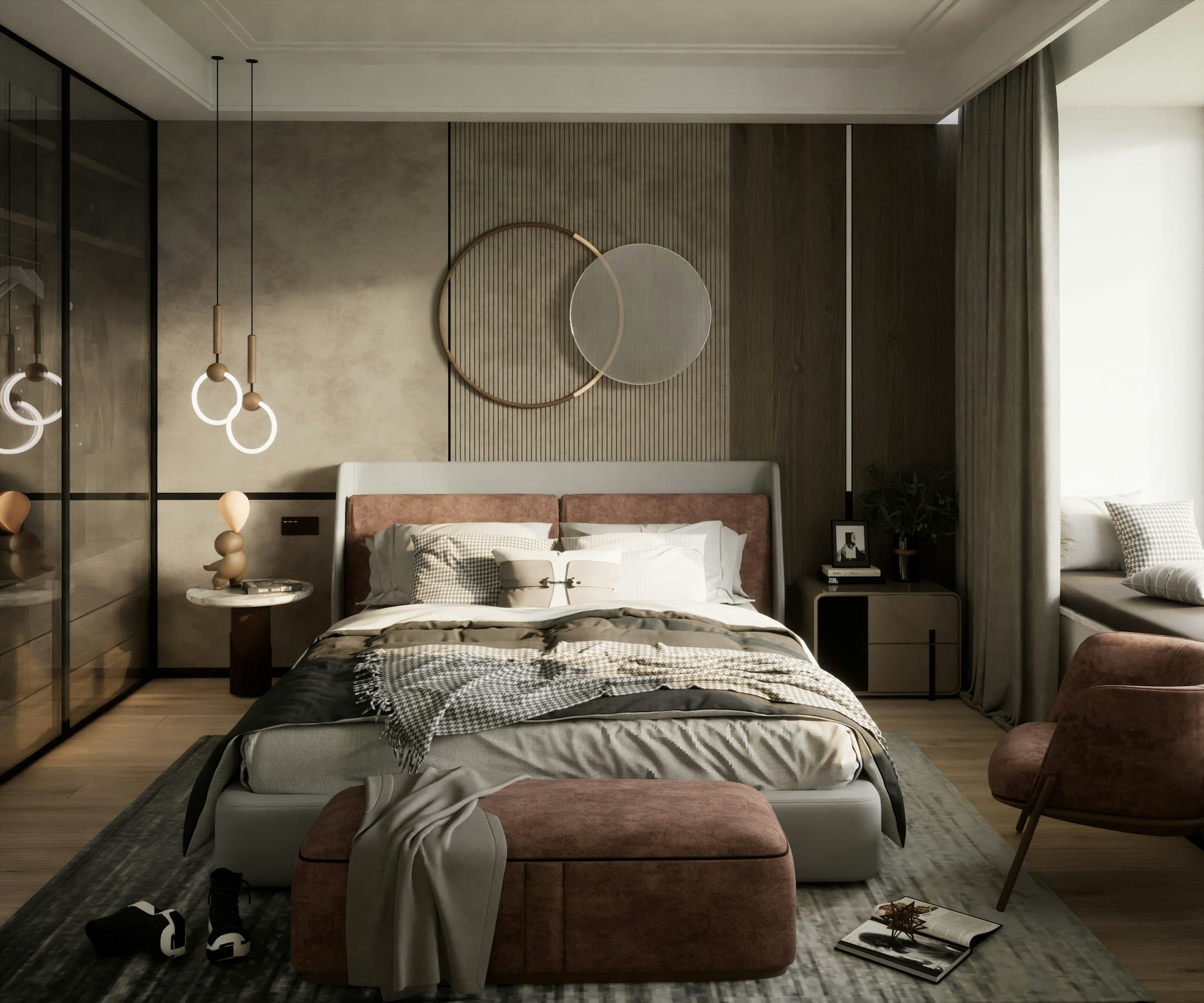
A full-height wardrobe is usually the largest surface in a bedroom — so its colour shapes the whole room. Pick well and the wardrobe becomes a calm backdrop or a confident feature; pick badly and it dominates.
Here are combinations we use often, grouped by the kind of room they suit.
For master bedrooms
- Walnut wood with off-white — wood-grain laminate on most shutters with a few off-white panels or a white loft; warm and timeless.
- Greige with brass profiles — soft and sophisticated; pairs well with a fabric headboard.
- Light oak with fluted glass — airy and modern; fluted glass on one section adds texture.
- Deep green or navy with wood — a richer look for larger rooms, balanced with light walls.
For small bedrooms
- Matching the wall colour — wardrobe shutters close to the wall shade make the unit recede and the room feel larger.
- White or ivory high-gloss — reflects light; choose acrylic for a seamless look.
- Mirrored sliding panels — double as a dressing mirror and visually widen the room.
For kids’ rooms
- Pastel blue, mint or blush with white — soft and cheerful without being childish.
- Light wood with one colour accent — the accent can be changed as they grow.
- Textured, matt laminates — hide fingerprints and scratches.
See more kids’ room ideas.
Two-tone wardrobes
Two-tone designs — for example wood on the main shutters and a solid colour on the loft, or a lighter colour on hinged doors with a darker frame — break up a large wall of storage. Keep to two colours and repeat one of them elsewhere in the room (the bed panel or side tables) so it feels planned.
Finishes to pair with colour
Matt laminates hide marks and suit busy rooms; gloss and acrylic reflect light; veneer gives real wood grain; lacquered glass adds colour with shine. Our finishes guide compares them, and the wardrobe design guide covers internals, sizes and cost. Browse wardrobe design ideas for inspiration.