The finish on your shutters is what you see and touch every day. It sets the character of a kitchen or bedroom — and it decides how much care the furniture needs.
Here are the five finishes we use most, compared honestly.
Finishes compared
| Finish | Look | Durability | Maintenance | Relative cost |
|---|---|---|---|---|
| Laminate | Huge range — matt, gloss, wood and stone textures | Very good; resists scratches and heat | Easy | ₹ |
| Membrane (PVC foil) | Seamless, routed and curved designs | Good; avoid direct heat | Easy | ₹₹ |
| Acrylic | Deep, mirror-like gloss or matt | Good; shows fine scratches and fingerprints | Wipe often | ₹₹–₹₹₹ |
| PU paint | Any colour, matt to high gloss, seamless edges | Good; can chip if hit hard | Moderate; can be repainted | ₹₹₹ |
| Wood veneer | Real timber grain, warm and natural | Good with quality polish | Needs care; re-polish over time | ₹₹₹ |
Laminate: the dependable all-rounder
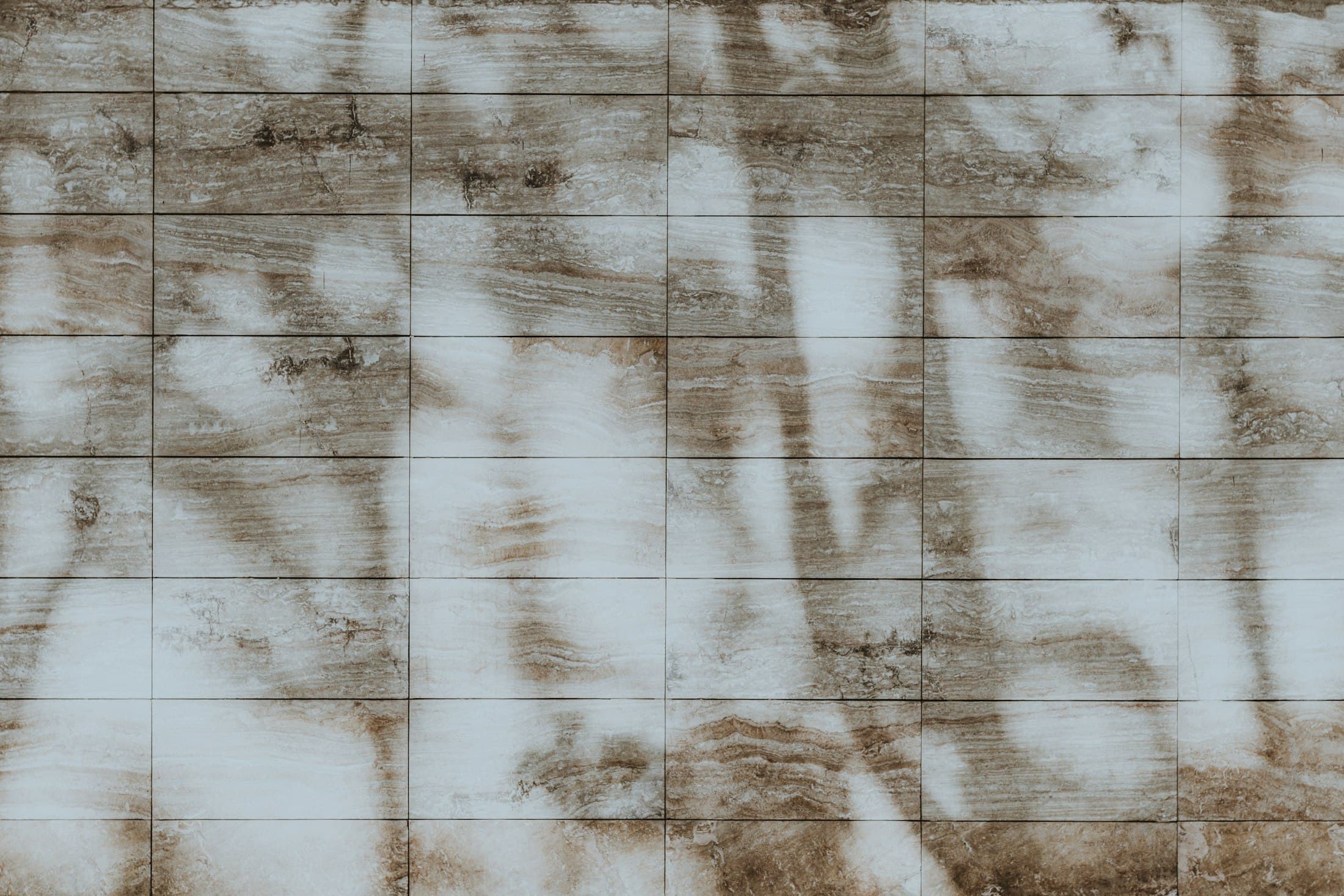
High-pressure laminates (typically about 0.8–1 mm thick) are tough, heat-resistant and come in hundreds of colours and textures, including convincing wood and stone. They suit busy family kitchens, kids’ rooms and the insides of every cabinet. The visible dark line at the edges can be minimised with matching edge banding.
Acrylic: high gloss, modern look
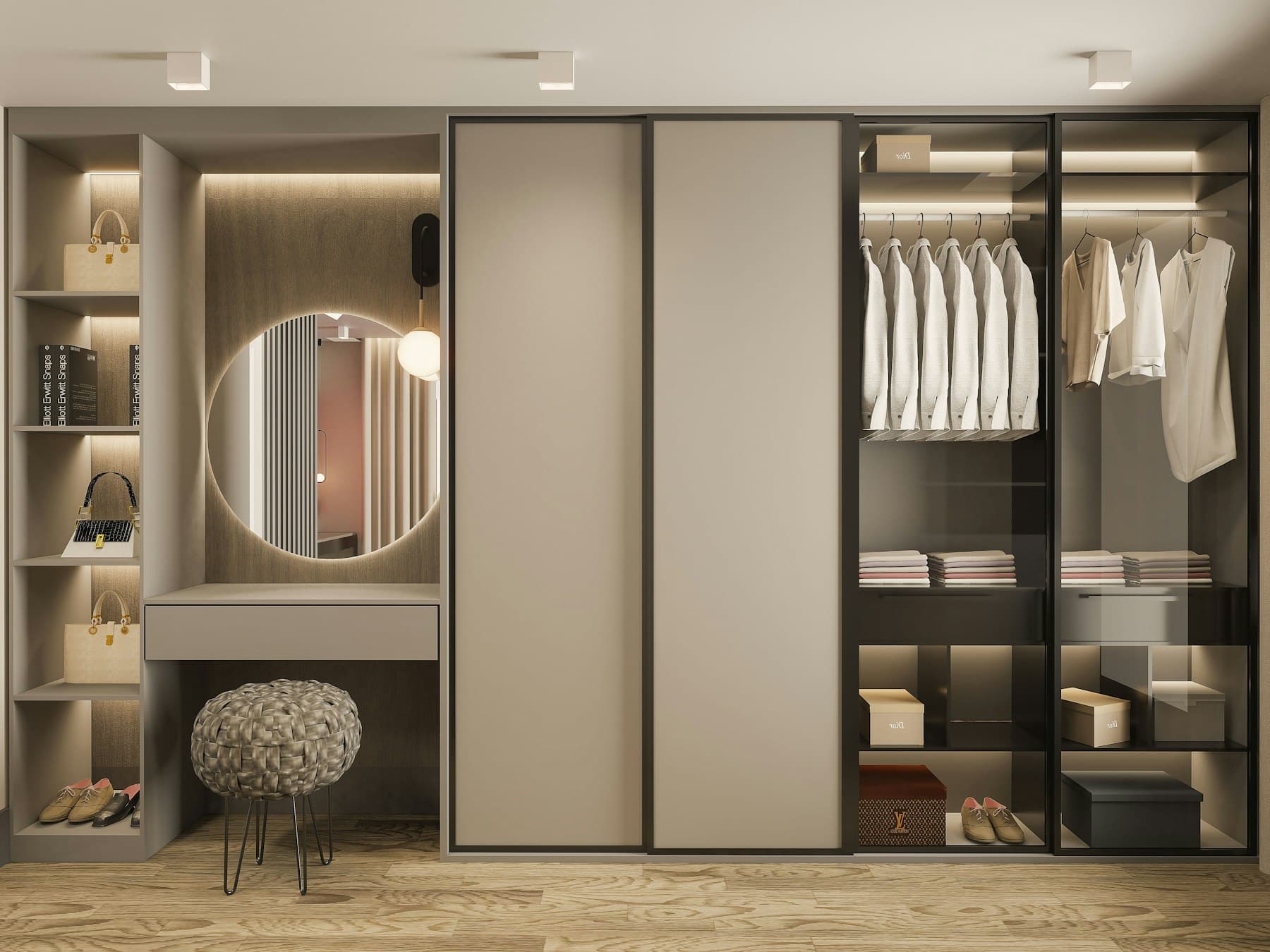
Acrylic gives a rich, glassy surface that makes small kitchens feel brighter. It is ideal for wall units and contemporary wardrobes. Its weakness is fine scratches and fingerprints, so many families combine acrylic upper cabinets with laminate base units that take more knocks. Anti-fingerprint matt acrylic is also available.
PU paint: any colour you want
Polyurethane paint is sprayed in layers on MDF, giving seamless edges and any shade — useful when you want a very specific colour. It can be refinished later. It is more expensive and needs careful handling, as sharp knocks can chip it.
Membrane: for routed and curved shutters
A PVC membrane is vacuum-pressed over a routed MDF shutter, so it wraps grooves, mouldings and curves without joints. It is popular for classic and shaker-style kitchens. Keep membrane shutters away from direct heat such as the side of an oven.
Veneer: real wood
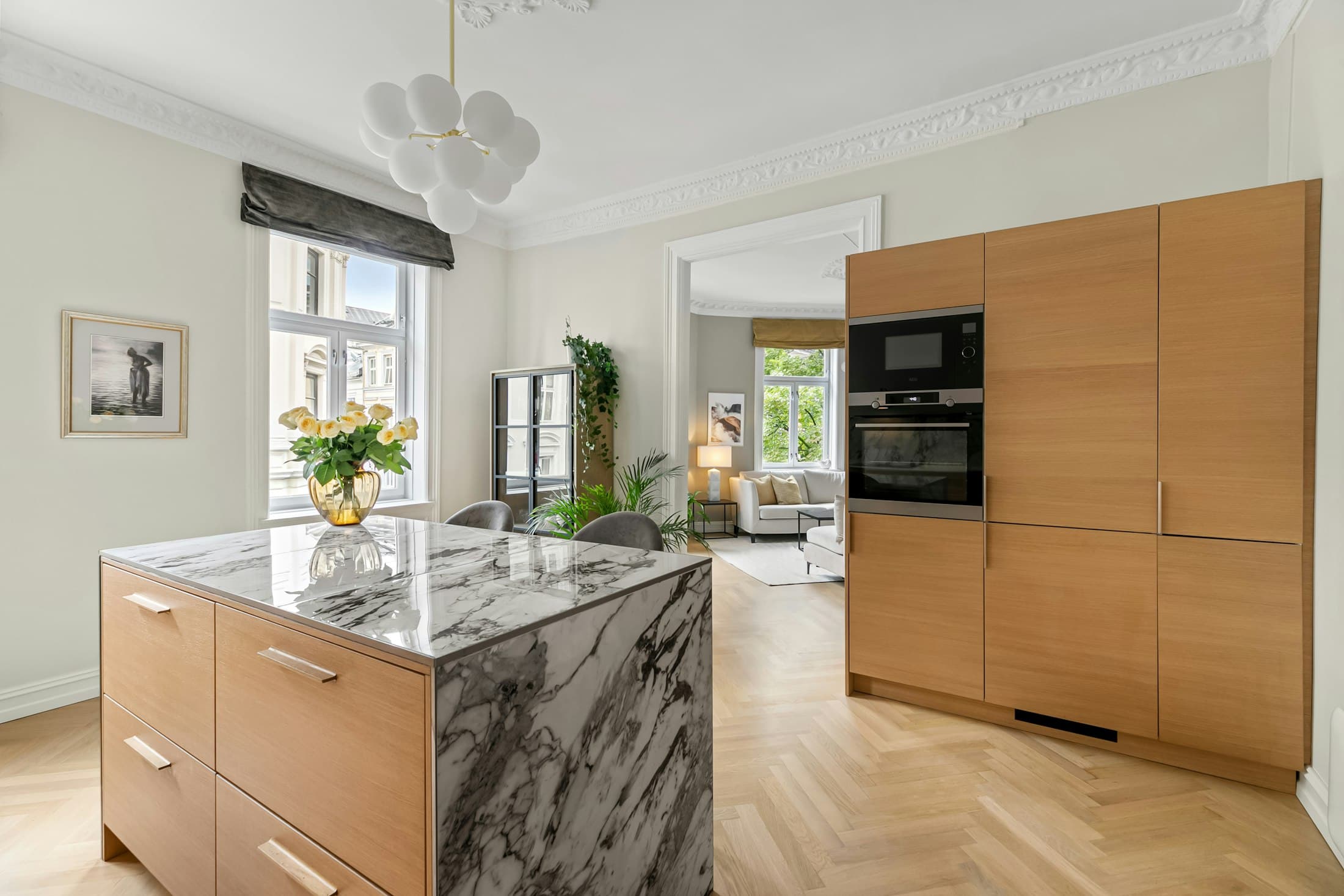
Veneer is a thin slice of real timber, so every sheet is unique. It brings warmth to living rooms, TV units, pooja units and wardrobes. It must be sealed with a good polish (PU or melamine) and protected from prolonged sunlight and water.
Which finish where?
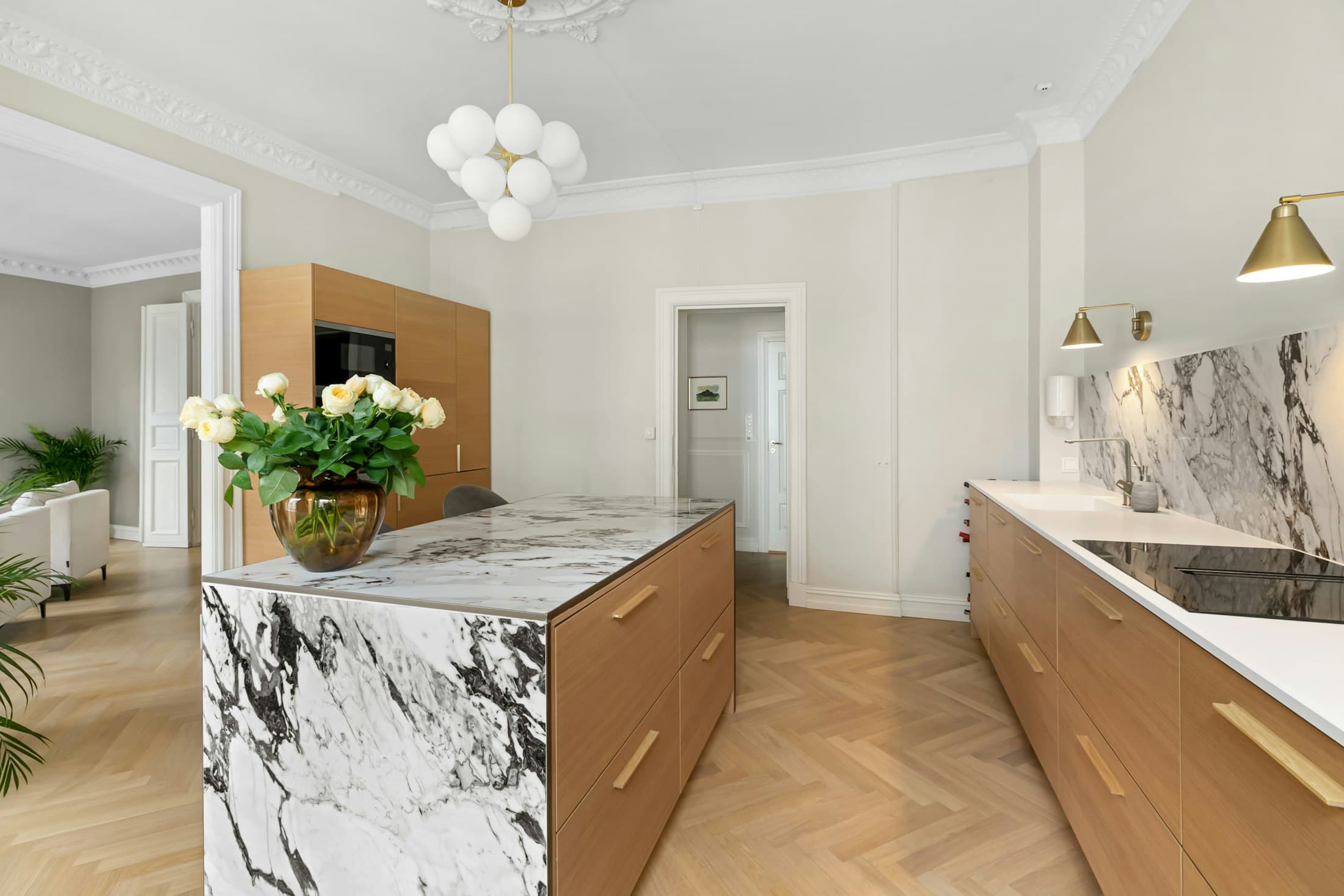
- Kitchen base units: laminate or PU — they take the most wear.
- Kitchen wall units: acrylic or PU for a brighter look.
- Wardrobes: laminate, acrylic or veneer; mirrors or glass for sliding fronts.
- Living room and TV unit: veneer, fluted panels or textured laminates.
- Kids’ rooms: laminate — tough and easy to clean.
The finish is only half of the story — the board underneath matters as much. Read our plywood vs MDF vs HDHMR guide, and see how finishes affect your modular kitchen cost.