“What style do you like?” is a hard question to answer if you have never thought about styles. Most people know what they like when they see it, but not what to call it.
Here are the styles our clients ask about most, what defines each one, and how to adapt it to the realities of an Indian home.
Modern and contemporary
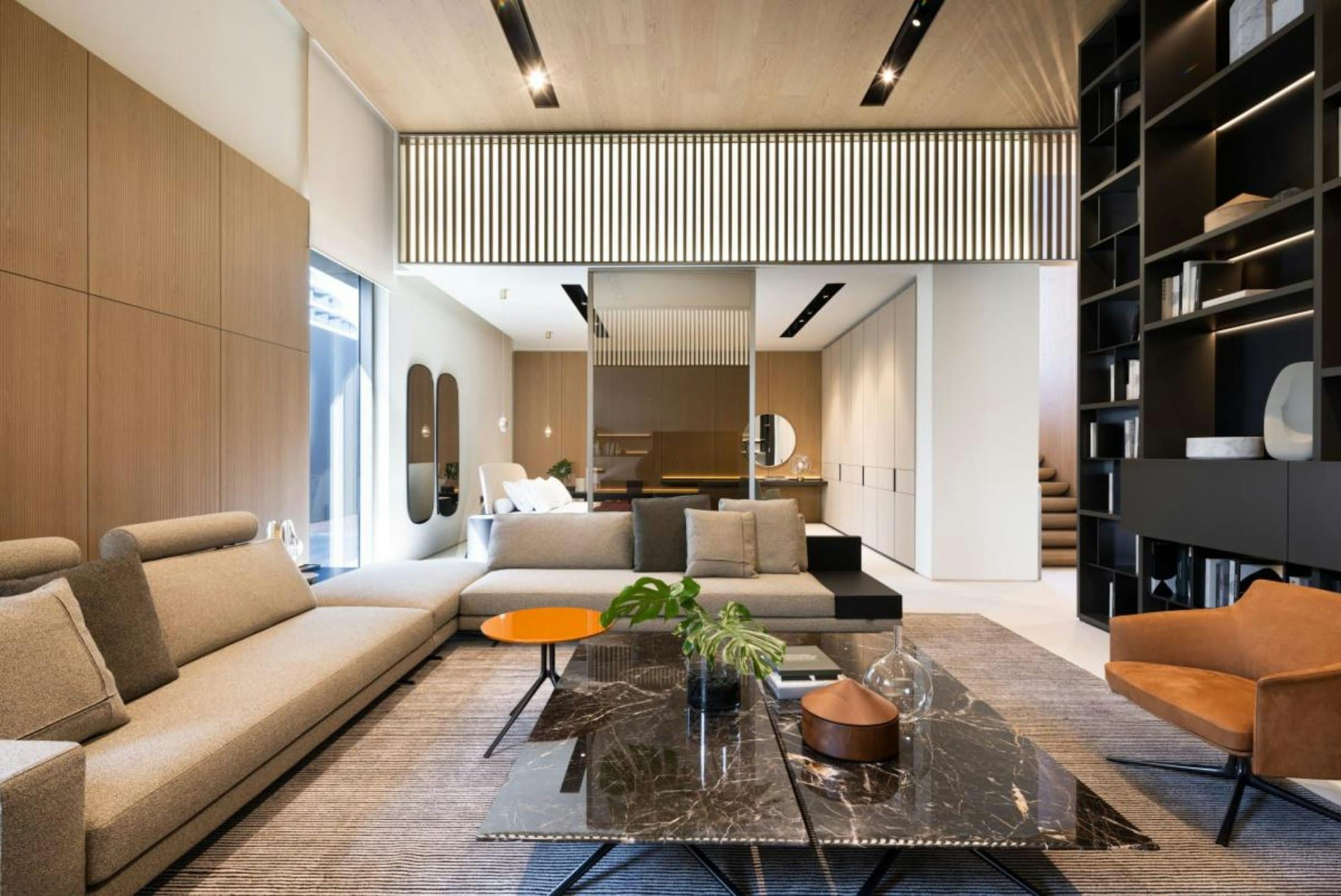
Modern design is defined by clean lines, flat surfaces, a restrained palette and very little ornament. Contemporary means “of today” — it borrows that clarity but adds current materials and softer shapes, like curved sofas and fluted panels. Together they are the most requested looks in NCR apartments, because they keep compact homes uncluttered.
Minimalist
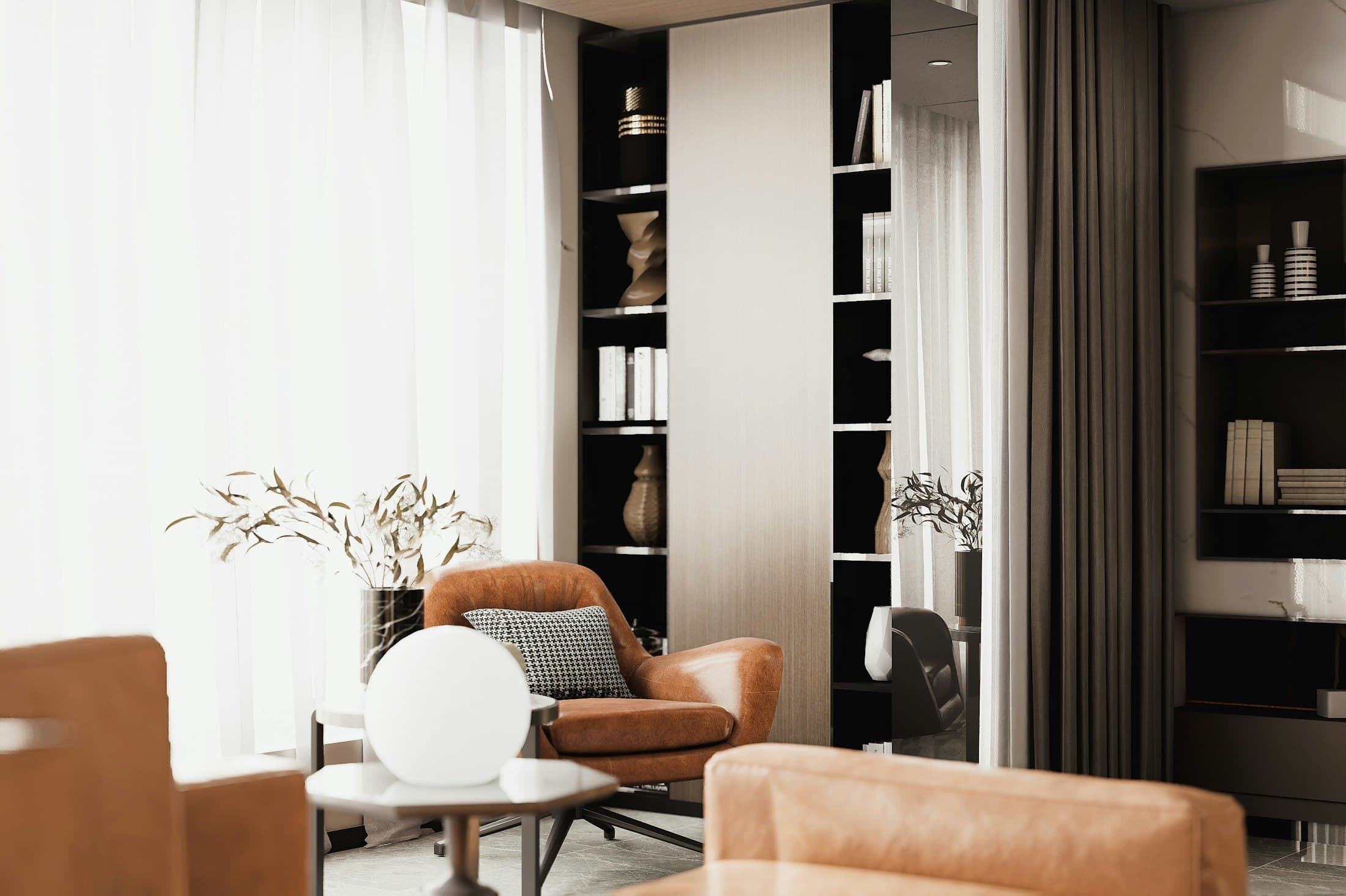
Minimalism is about less: fewer objects, hidden storage, and a calm, neutral palette. In Indian homes — with festivals, guests and many belongings — minimalism works best when it is backed by generous concealed storage. Handle-less wardrobes and a closed TV unit are the foundations.
Indian traditional and Indian contemporary
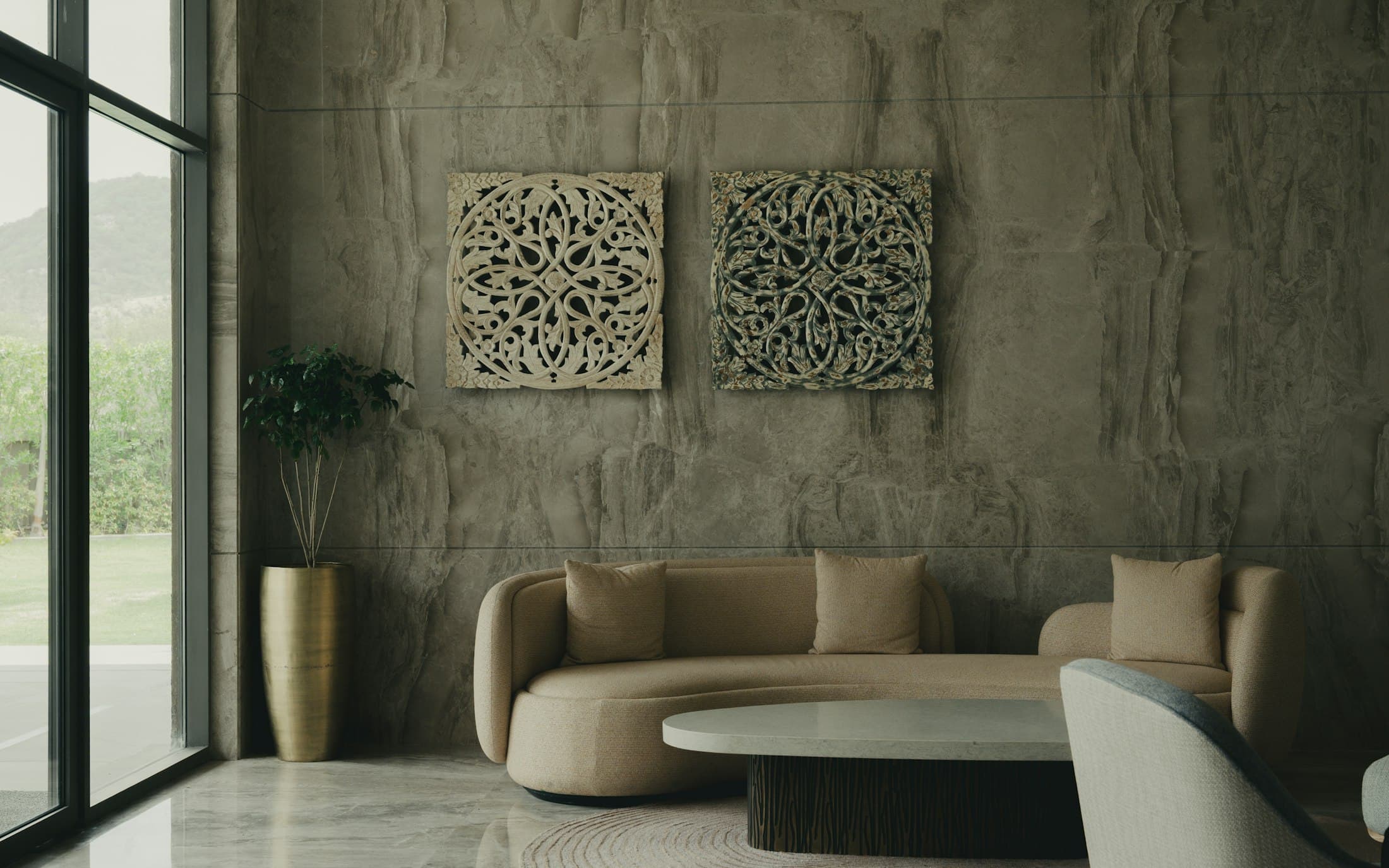
Traditional Indian interiors use carved wood, brass, jaali patterns, rich textiles and warm colours. Indian contemporary keeps those references — a carved mandir, a jaali screen, handloom fabrics — within a cleaner, modern layout. It is one of our favourite approaches because it feels rooted without feeling heavy.
Japandi and Scandinavian
Scandinavian design uses light woods, white walls and cosy textiles. Japandi blends it with Japanese restraint: low furniture, natural materials, muted earthy tones. Both suit smaller flats and bright rooms; in NCR’s dusty climate, closed storage keeps them looking serene.
Industrial, transitional and luxe
- Industrial — exposed textures, metal, concrete-look finishes and dark tones; works well in home offices and some commercial spaces.
- Transitional — a balance of classic shapes and modern simplicity; ideal when family members have different tastes.
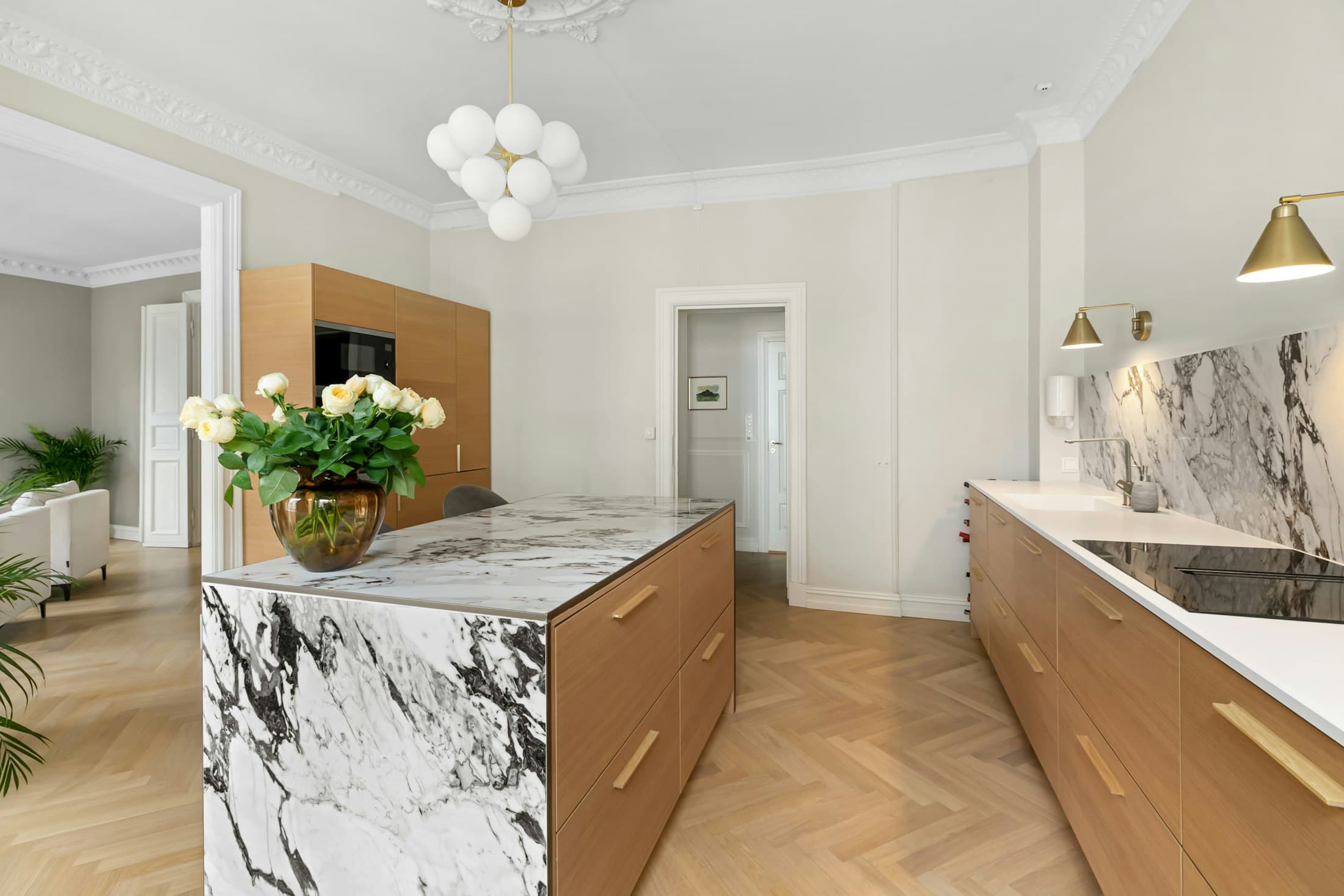
- Modern luxury — marble, veneer, brass details, layered lighting and bespoke joinery; suits larger apartments and villas.
How to find your style
- Save 15–20 images of rooms you like, without thinking about style names.
- Look for what repeats — colours, materials, amount of decoration.
- Note what you dislike too; it is often just as useful.
- Consider how you live — children, pets, cooking, guests — and what is practical.
- Share all of it with your designer; we translate it into a material palette and layout.
Explore our design ideas for every room, read about cabinet finishes, or book a consultation to talk it through.