A well-designed false ceiling hides wiring and AC pipes, softens light and gives a room a sense of proportion. A badly designed one makes the room feel lower, collects dust and cracks within a year.
Here is how the main false ceiling materials compare, what they typically cost, and how to choose a design that suits your room.
The four main materials
| Material | Approx. cost per sq ft* | Best for | Watch out for |
|---|---|---|---|
| Gypsum board | ₹85 – 150 | Living rooms, bedrooms — clean, fast, crisp lines | Not for wet areas unless moisture-resistant board is used |
| POP (plaster of Paris) | ₹70 – 130 | Curves and decorative mouldings | Slower, messier work; quality depends heavily on the craftsman |
| PVC panels | ₹60 – 120 | Bathrooms, balconies, utility areas | Looks less premium in living spaces |
| Wooden / veneer | ₹250+ | Feature ceilings and warm accents | Higher cost; needs polish and care |
*Includes typical material and labour on a standard frame. Lighting, cove profiles, paint and complex designs are extra, and prices vary with design and site conditions.
Choosing a design for your room
Living and dining
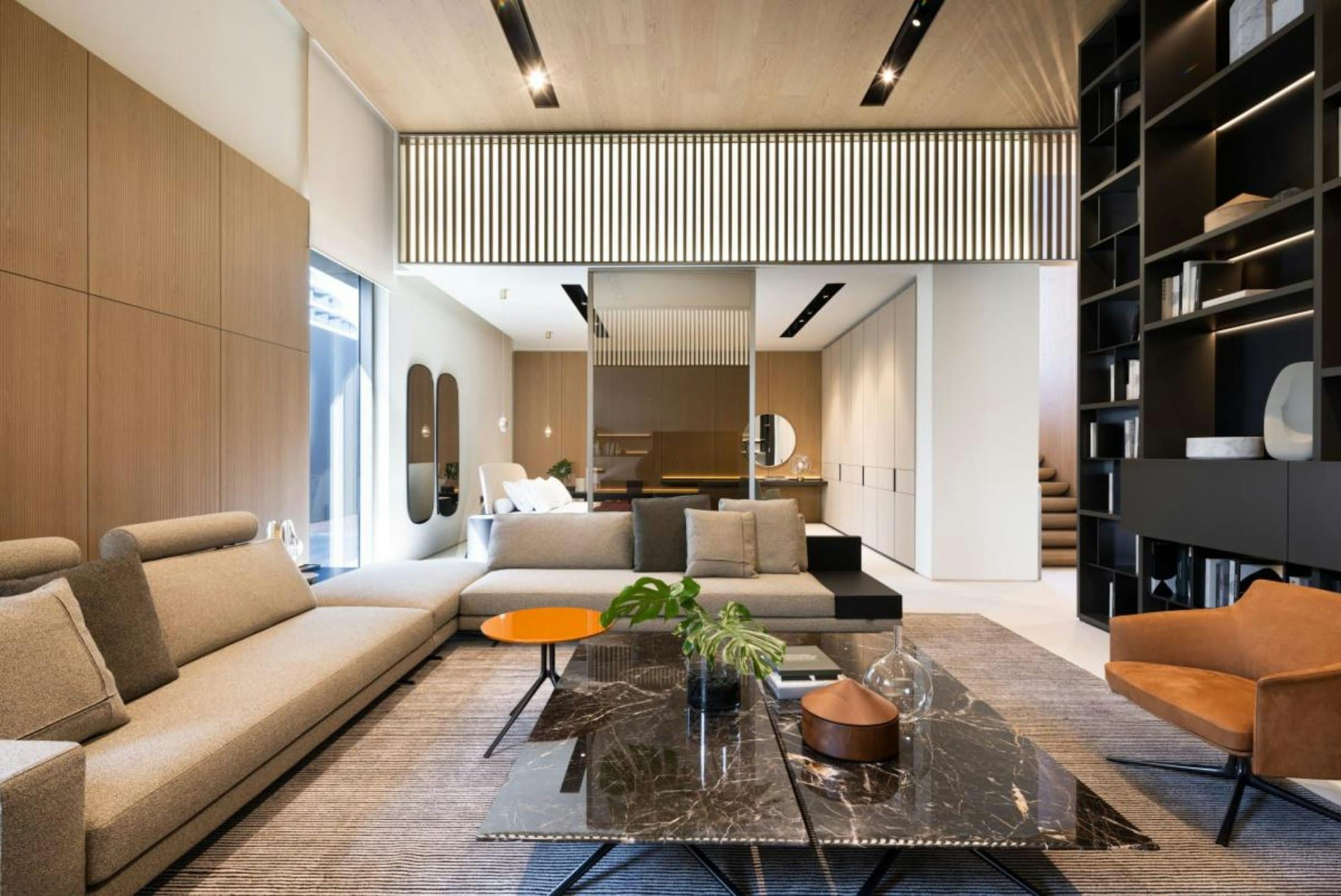
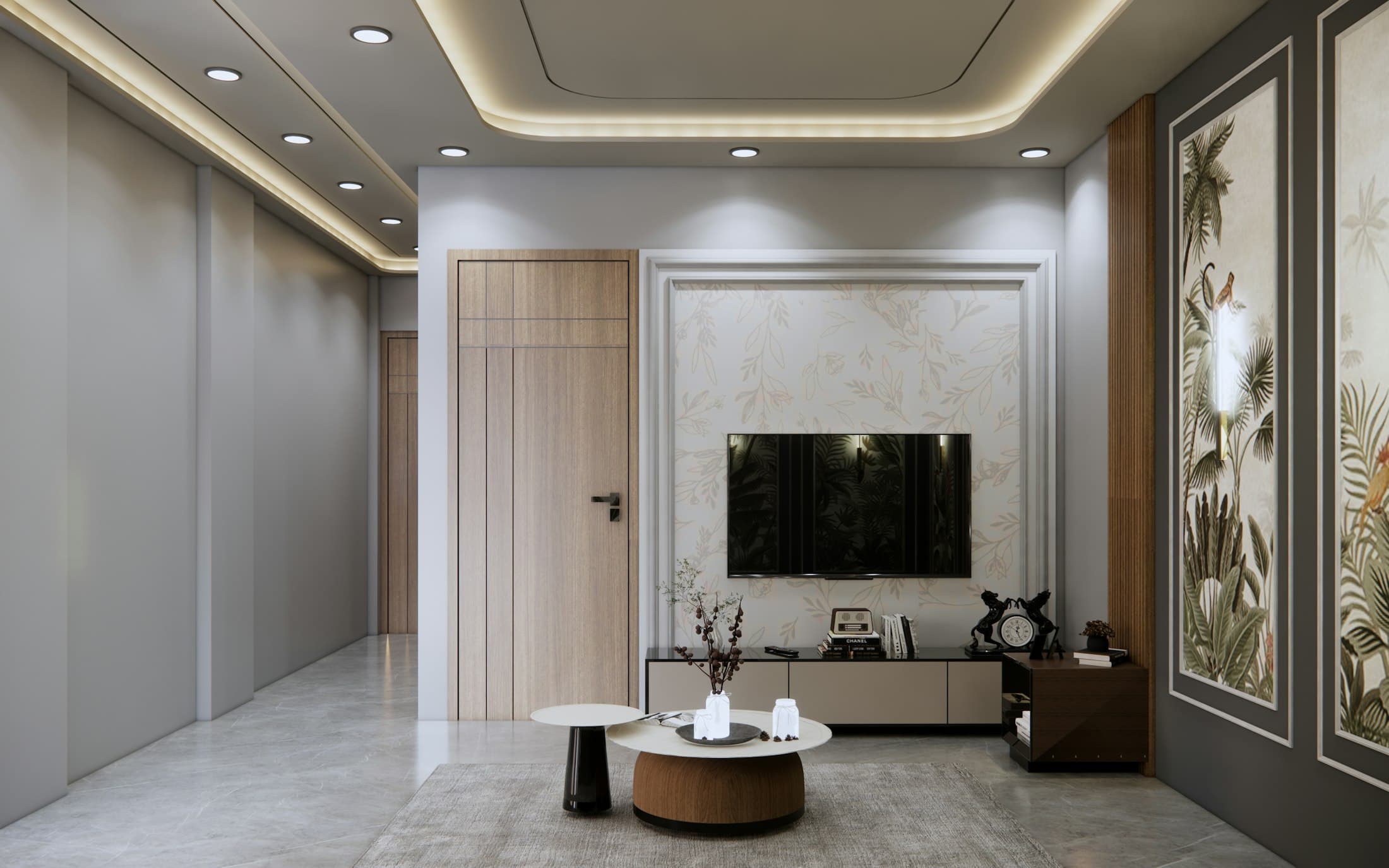
A peripheral ceiling (a border around the room with the centre left open) with a cove light keeps height in the middle while hiding services at the edges. Over the dining table, a recessed panel or a single statement pendant defines the zone. See living room ideas.
Bedrooms
Keep it simple: a cove over the bed wall, or a flat ceiling with a few warm downlights. Avoid lights directly above the pillow. See ten bedroom false ceiling designs.
Kitchens and bathrooms
In kitchens, use moisture-resistant gypsum and leave access to the chimney duct. In bathrooms, PVC or moisture-resistant boards with an inspection panel for the geyser and plumbing.
How much ceiling height will you lose?
Most false ceilings drop the ceiling by 4–8 inches (10–20 cm) where they are installed. With a typical NCR apartment ceiling of about 9.5–10 ft, a peripheral ceiling keeps the room feeling tall. If your ceiling is lower, choose a thin border or a flat ceiling only where services need hiding.
Lighting ideas
- Cove lighting for a soft, indirect glow — warm white (2700–3000K) feels most relaxing in homes. See our home lighting guide.
- Downlights placed over furniture and work areas, not in a rigid grid.
- Profile lights — slim linear lines that suit modern interiors.
- Dimmers in living and bedrooms so one ceiling works for day and night.
Common mistakes to avoid
- Too many layers and steps in a small room — it makes the ceiling feel heavy.
- Skipping access panels for AC, wiring and plumbing.
- Cheap frames that sag, or joints that are not taped properly and crack.
- Installing the ceiling before electrical points and AC positions are final.
False ceilings are one of the factors in your overall budget — see our home interior cost guide and browse false ceiling design ideas.