The countertop takes more punishment than any other surface in an Indian kitchen: hot kadhais, turmeric and oil, lemon and tamarind, heavy chopping and daily scrubbing.
Here is how the main countertop materials compare, and which one suits the way you cook.
Countertops compared
| Material | Stain resistance | Heat resistance | Maintenance | Relative cost |
|---|---|---|---|---|
| Granite | Good (when sealed) | Excellent | Low; reseal occasionally | ₹–₹₹ |
| Quartz (engineered) | Excellent — non-porous | Good; use trivets for very hot vessels | Very low | ₹₹–₹₹₹ |
| Marble | Poor — porous, etches with acids | Good | High | ₹₹–₹₹₹ |
| Solid surface (acrylic) | Good; seamless joints | Moderate — avoid hot pans | Low; scratches can be buffed | ₹₹₹ |
| Sintered stone / porcelain slab | Excellent | Excellent | Very low | ₹₹₹ |
Prices vary widely within each material by colour, origin and slab size, so compare specific slabs rather than categories.
Granite: the dependable workhorse
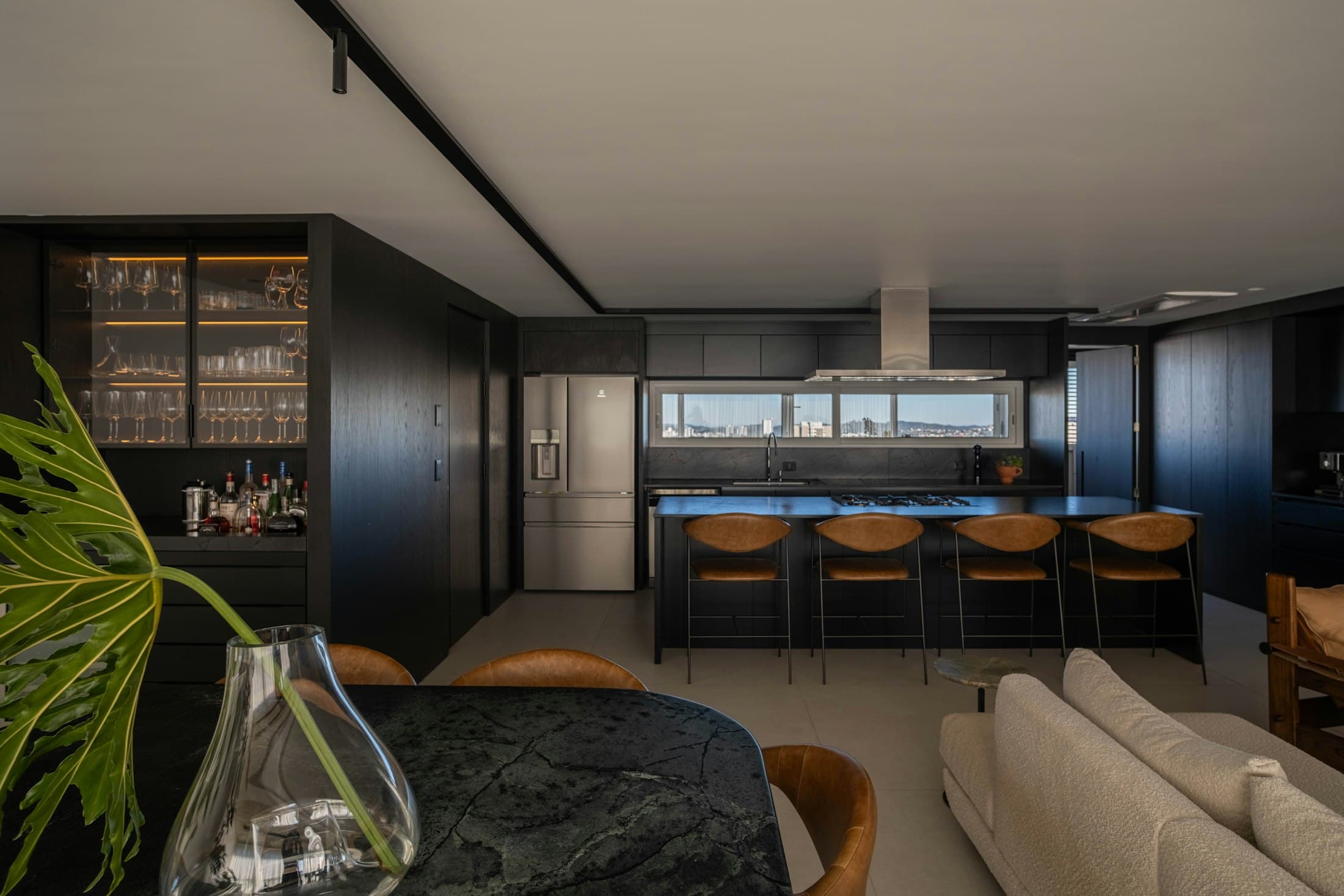
Granite is hard, heat-resistant and economical, which is why it has been the default in Indian kitchens for decades. Darker granites such as black or deep brown hide stains best. Seal it after installation and every year or two, and wipe up turmeric and oil promptly.
Quartz: easiest to live with
Engineered quartz is made from crushed quartz bound with resin. It is non-porous, so it resists turmeric, oil and acidic stains far better than natural stone, and it comes in consistent colours including marble-look designs. It handles everyday heat well, but very hot vessels straight off the flame should go on a trivet.
Marble: beautiful, but not for the cooking zone
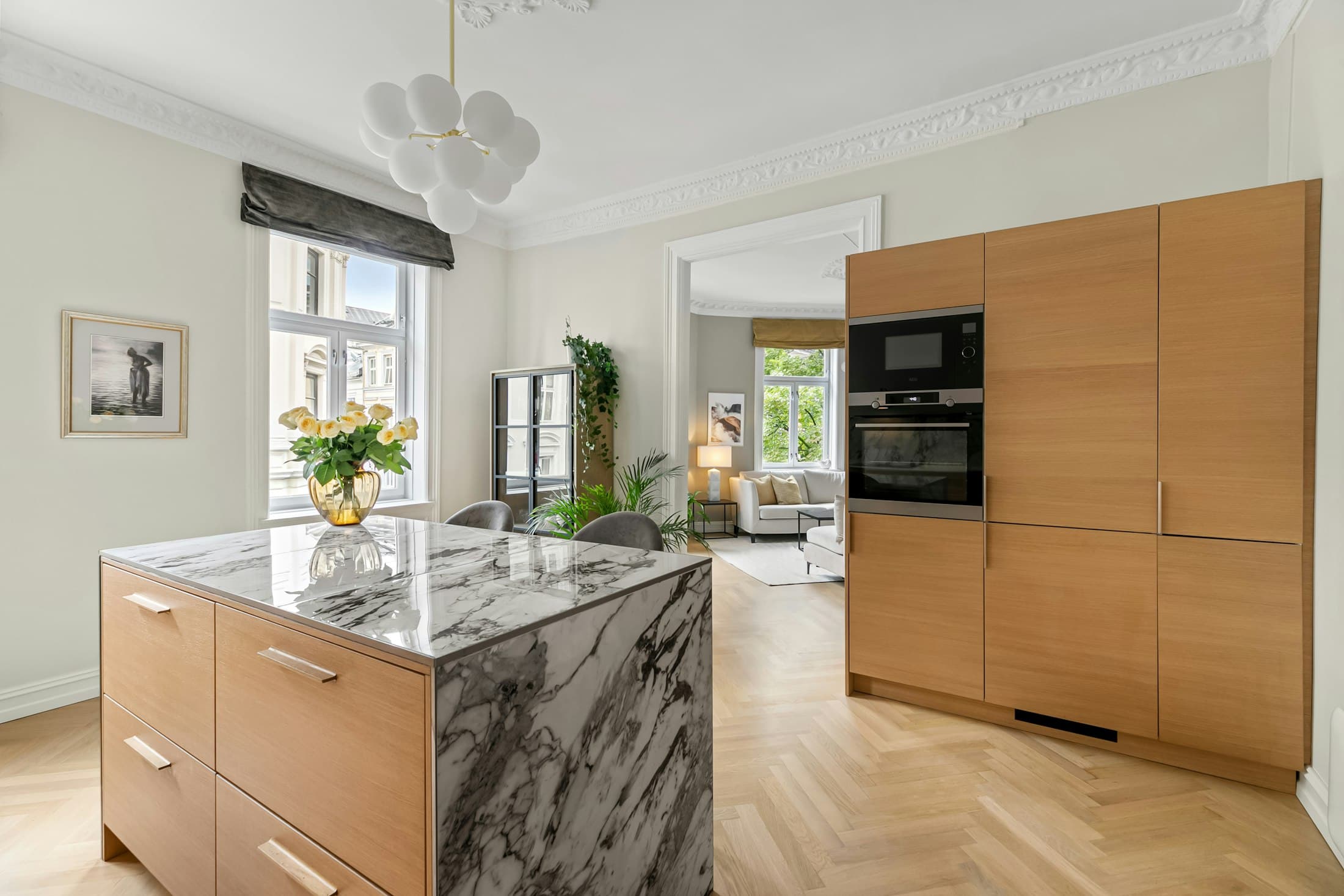
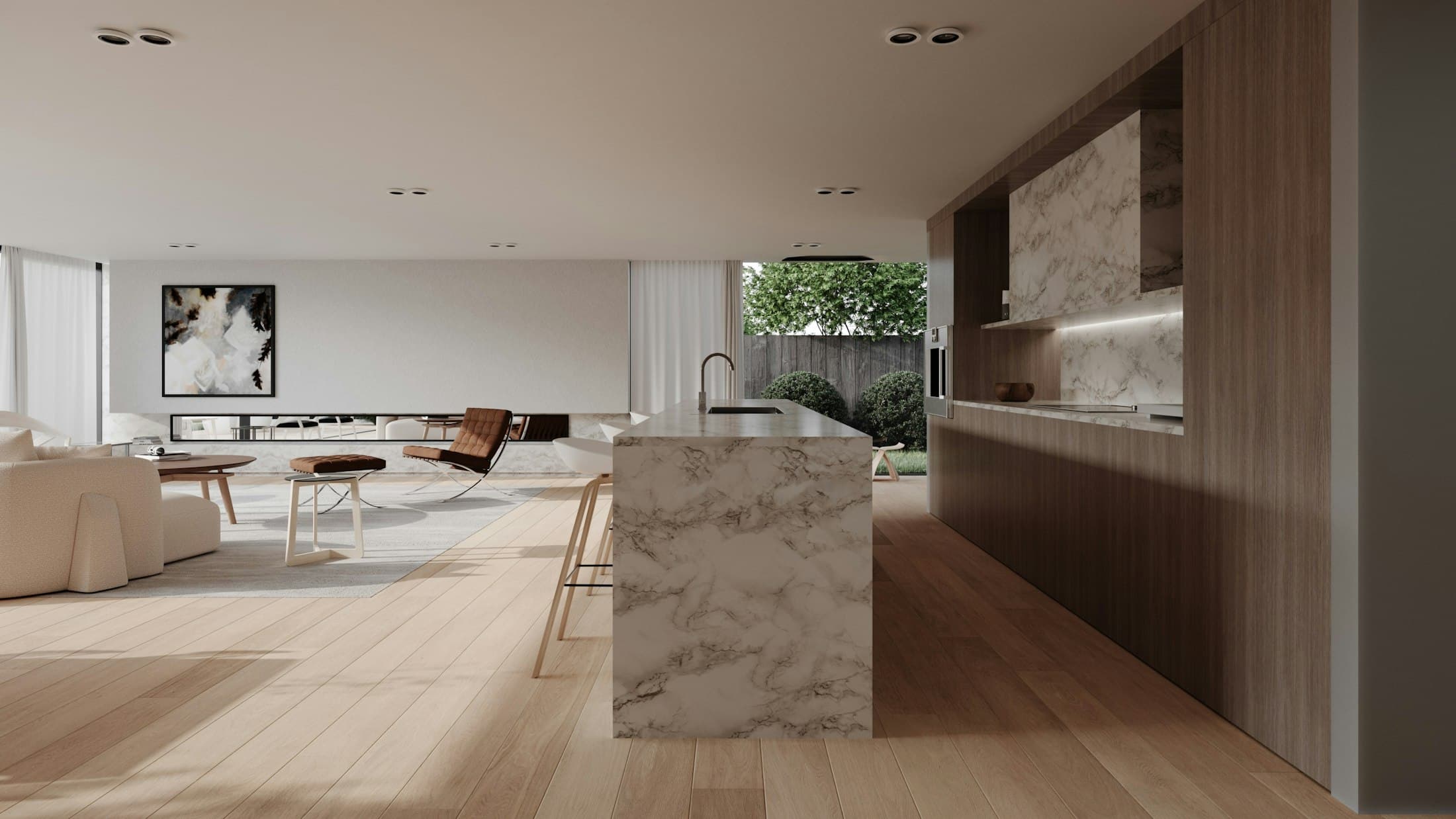
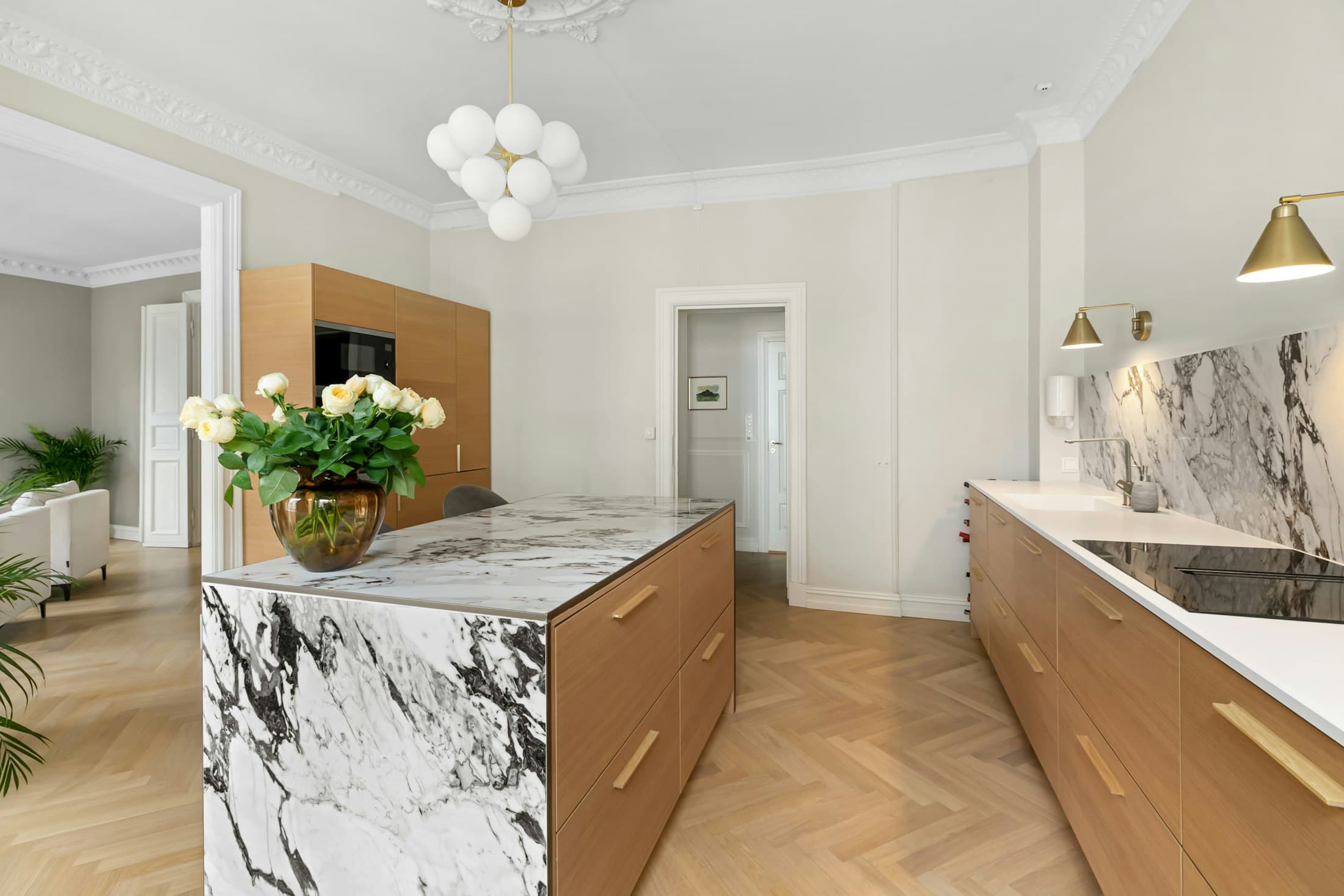
Natural marble is stunning but porous and soft. Lemon, tamarind and tomato etch it, and turmeric stains it. Use it on an island, a breakfast counter or a dining top — not where you cook every day. If you love the look, choose marble-look quartz or sintered stone for the main counter.
Solid surface and sintered stone
Solid surface (acrylic) can be joined invisibly and moulded with integrated sinks, giving a seamless look; it is less heat-resistant, so keep hot pans off it. Sintered stone and large porcelain slabs are extremely hard and stain- and heat-resistant, and suit premium kitchens.
Details that matter
- Thickness: 18–20 mm slabs are common; a thicker edge profile gives a more solid look.
- Edge profile: a slightly rounded edge chips less than a sharp one.
- Backsplash: use the same material or easy-clean tiles at least up to the wall cabinets.
- Cut-outs: plan the sink and hob cut-outs precisely, with proper support beneath.
- Colour: mid-to-dark tones and patterned surfaces are the most forgiving in Indian kitchens.
The countertop is one part of your kitchen budget — see our modular kitchen cost guide and small kitchen ideas, or book a consultation to see samples at our Ghaziabad studio.